The Science of L-Theanine: Why Tea Gives You Energy and Calm
Almate
June 17th, 2026
No Comments
6 mins read
Share this article
The Amino Acid Revolution: How L-Theanine was Discovered in Tea
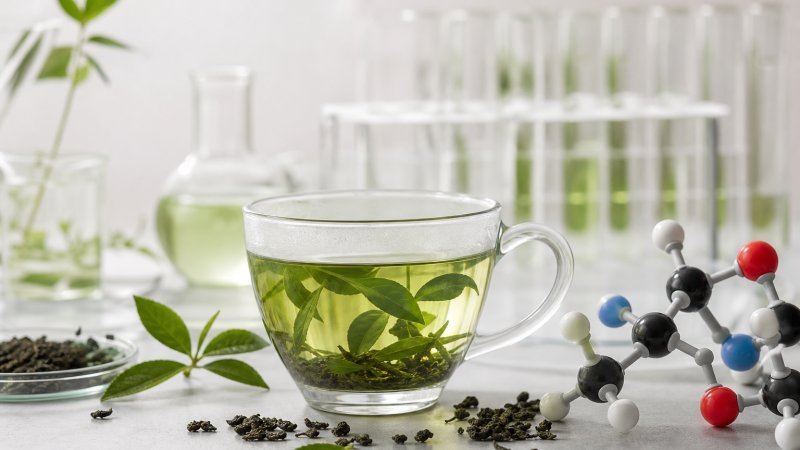
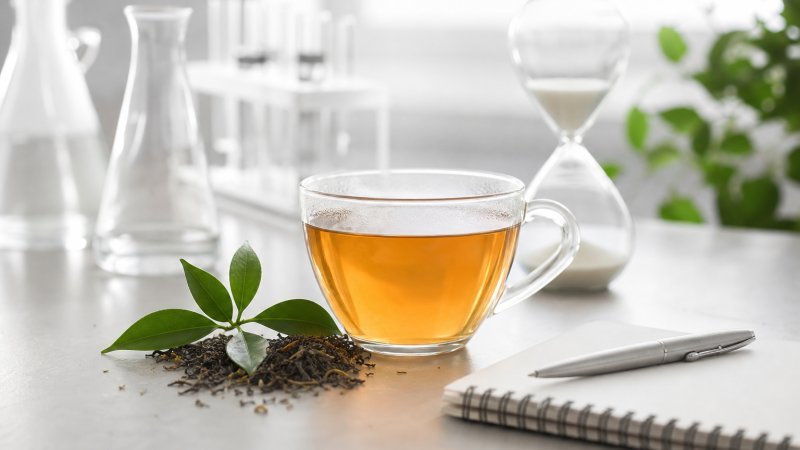
The science of L-theanine has captured the interest of researchers, thanks to its unique properties for providing energy and calm. This compound, found mainly in green tea, has roots in both modern scientific research and traditional practices. In cultures such as the Chinese and Japanese, tea consumption has been a millennia-old tradition, valued not only for its flavor, but also for its calming and revitalizing effects.
Modern studies have confirmed that L-theanine, an amino acid found in tea, plays a crucial role in these tea benefits. It is believed to have been discovered in the 1940s by Japanese scientists investigating the unique components of tea. Combined with caffeine, L-theanine improves concentration and reduces stress, providing a unique experience of \”relaxed alertness\”. This duality of energy and calm has been the subject of numerous investigations. Discover more about tea culture here.
How L-Theanine Crosses the Blood-Brain Barrier and Activates Alpha Waves
AdvertisementYour AdSense code will appear here
L-theanine is an amino acid that acts on the brain, promoting a state of calm alertness. Unlike caffeine, which can cause nervousness, L-theanine induces relaxation without sedation. Additionally, it improves the production of neurotransmitters such as serotonin and dopamine, which are related to mood and well-being.
Tea also contains caffeine, which increases energy and concentration. However, the presence of L-theanine modulates the effects of caffeine, reducing the possibility of anxiety and increasing focused attention. This combination of tea ingredients not only provides energy, but also supports emotional stability. This synergy is a powerful example of how the benefits of tea can support both body and mind.
The Studies that Prove L-Theanine + Caffeine is the Perfect Combination
Numerous studies have explored the science of L-theanine and its effects on well-being. A notable article by Unno et al. (2013) in the journal \”Nutrients\” found that L-theanine significantly improved attention and reduced perceived stress in young adults. Another study in the \”Journal of Clinical Psychiatry\” (Lu et al., 2015) showed improvements in anxiety symptoms in participants who took L-theanine.
The European Medicines Agency (EMA) has also evaluated the benefits of L-theanine, supporting its use to reduce tension and improve concentration. These studies reflect a growing body of evidence supporting the role of L-theanine and tea in improving energy and calm. When examining both tradition and modern science, it is clear that tea is more than a simple beverage; it is a natural enhancer of well-being.
Gyokuro, Sencha and Matcha: How Much L-Theanine is Really in Your Cup
AdvertisementYour AdSense code will appear here
To take advantage of the beneficial effects of tea, it is recommended to consume several cups of green tea per day. Studies suggest that an intake of 100–200 mg of L-theanine can be effective in improving mood and reducing stress. Preparing tea with hot, but not boiling, water and letting it steep for 3 to 5 minutes can optimize L-theanine extraction.
Although there is no official standard dose for L-theanine, consuming tea regularly is a safe way to integrate this compound into daily life. In general, it is better to enjoy this drink during the day to avoid any interference with nighttime sleep. If you are looking for more information about available tea products, you can visit our store.
L-Theanine in Supplement vs. in Tea: Doses, Interactions and What You Should Know
Consuming tea containing L-theanine is generally safe for most people. However, those who are pregnant, breastfeeding or taking specific medications should consult a health professional before significantly increasing their tea intake.
Side effects are minimal, but excess caffeine can cause insomnia, anxiety or palpitations in sensitive people. It is essential to pay attention to how your body responds to tea and adjust consumption as necessary. For those with chronic health conditions or taking medications, it is always better to be cautious and seek medical advice.
From Japanese Cha-No-Yu to 21st Century Supplements: The Trajectory of L-Theanine
AdvertisementYour AdSense code will appear here
In traditional Chinese medicine, green tea has been used for centuries not only as a refreshment, but as a natural medicine to relieve fatigue and improve cognitive function. In Japan, the tea ceremony is a ritual that symbolizes inner peace and mental clarity, aspects attributed in part to L-theanine.
These traditional approaches recognize and value the effects of tea on overall well-being. Although cultural practices vary, the recognition of the benefits of tea and its components, such as L-theanine, is a common theme in many cultures.
Frequently Asked Questions
What is L-theanine? L-theanine is an amino acid found mainly in green tea. It is known for promoting a state of relaxation while improving mental focus.
How does tea affect energy? Tea provides energy by combining caffeine with L-theanine. Caffeine stimulates, while L-theanine modulates the effects, promoting a state of calm alertness.
Is L-theanine good for stress? Yes, L-theanine is known to reduce cortisol, a stress hormone, and to promote a relaxed mental state, thereby improving the stress response.
What tea contains L-theanine? Green tea is the richest source of L-theanine, although it is also found in other tea varieties such as white tea and black tea.
What are the benefits of tea? The benefits of tea include improved concentration, stress reduction, and support for heart health, thanks to its antioxidants and polyphenols.
Conclusion
The science of L-theanine reveals how something as simple as a cup of tea can offer both energy and calm. This unique amino acid works in harmony with caffeine, allowing tea to provide benefits for body and mind. If you wish to integrate these benefits into your daily life, consider enjoying a cup of green tea regularly. Remember to consult a professional before making significant changes to your diet or health regimen.
References and Further Reading
Hidese S, et al. (2019). Effects of L-Theanine administration on stress-related symptoms and cognitive functions in healthy adults. Nutrients. 11(10):2362. DOI: 10.3390/nu11102362
Kimura K, et al. (2007). L-Theanine reduces psychological and physiological stress responses. Biol Psychol. 74(1):39-45. DOI: 10.1016/j.biopsycho.2006.06.006
Owen GN, et al. (2008). The combined effects of L-theanine and caffeine on cognitive performance and mood. Nutr Neurosci. 11(4):193-8. DOI: 10.1179/147683008X301513
Kochman J, et al. (2021). Health benefits and chemical composition of matcha green tea. Molecules. 26(1):85. DOI: 10.3390/molecules26010085
Kuriyama S, et al. (2006). Green tea consumption and mortality due to cardiovascular disease, cancer, and all causes in Japan. JAMA. 296(10):1255-65. DOI: 10.1001/jama.296.10.1255
Learn how to make a functional granita tea at home. Discover recipes, health benefits, preparation tips and cultural variants for this refreshing summer drink.
Can you drink tea while fasting? Discover which infusions support intermittent fasting, their scientific evidence, safety precautions and myths vs reality.
Discover lechuguilla, the strawberry tree and St John’s wort — Spanish native plants with surprising medicinal properties, scientific evidence, safety precautions and integration tips.
Compare traditional horchata and cold infusions in the battle of Spanish natural drinks. Nutritional profiles, science, preparation tips and cultural roots explored.
Make tea the star of your Saturday wellbeing ritual. Antioxidants, L-theanine, preparation tips, cultural traditions and science-backed benefits for a mindful weekend.
Discover how lavender, passionflower and valerian improve sleep quality on hot nights. Scientific evidence, preparation tips, safety precautions and cultural traditions.
Build your perfect travel infusion kit for summer. Digestive, relaxing and refreshing teas — scientific evidence, preparation tips, cultural traditions and practical advice.
Explore adaptogen teas — ginseng, ashwagandha, rhodiola — their active compounds, scientific evidence, preparation tips and cultural origins. A guide to choosing well.