Lavender, Passionflower and Valerian: The Trio that Transforms Your Hot Summer Nights
Almate
June 17th, 2026
No Comments
5 mins read
Share this article
Lavender, Passionflower and Valerian: A History of Traditional and Scientific Use
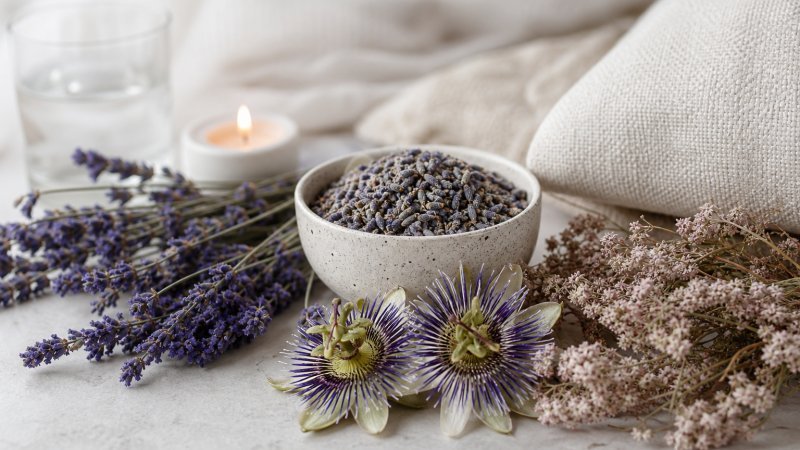
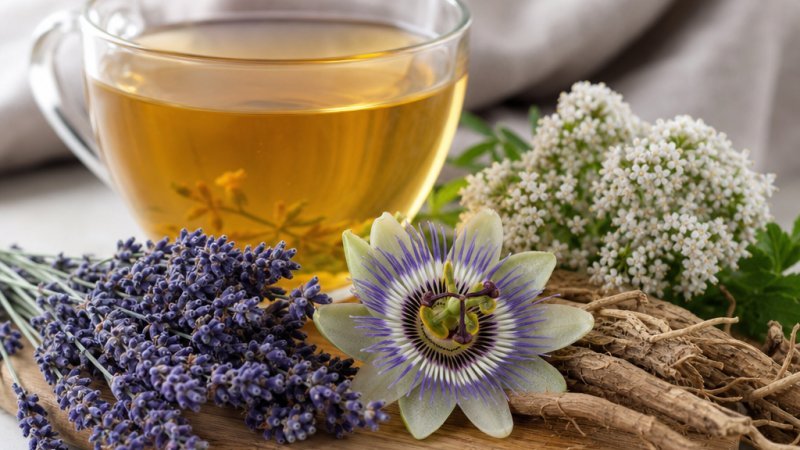
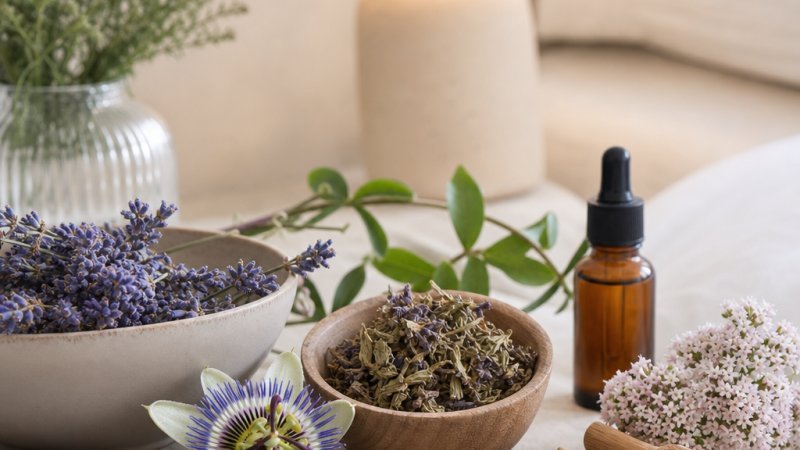
The combination of lavender, passionflower and valerian has been valued for centuries across diverse cultures for their relaxing and sleep-enhancing properties. These natural sleep remedies have been used to calm the mind and improve rest. Lavender, known for its distinctive aroma, has traditionally been used in European medicine. Passionflower has a rich history in Native American medicine as a natural remedy for anxiety and insomnia. Valerian is famous in European herbal traditions for its ability to induce sleep and relax the nervous system (Blumenthal, 1998).
Today, scientific research supports many of these traditional uses. Studies have shown these plants can have beneficial effects on the nervous system, helping to improve sleep quality, especially during hot nights. This trio of herbs can be particularly useful when heat interferes with nightly rest, offering a natural alternative to conventional medications.
Linalool, Chrysin and Valerenic Acid: The Active Compounds of the Sleep-Giving Trio
The effectiveness of lavender, passionflower and valerian lies in their active components. Lavender contains linalool, a compound with anxiolytic properties that can help calm the mind. Studies suggest its aroma also reduces stress-inducing brain activity (Cavanagh & Wilkinson, 2002). Passionflower has flavonoids believed to increase GABA levels in the brain, a neurotransmitter promoting relaxation (Dhawan et al., 2004).
Valerian contains valerienic acids that affect GABA receptors, increasing tranquillity and reducing the time needed to fall asleep. These mechanisms help these herbs function as effective natural and restorative sleep remedies.
What Science Demonstrates about Each of the Three Sedating Plants
Several studies have explored the effectiveness of lavender, passionflower and valerian for improving sleep. A study published in Aromatherapy Research showed that the aroma of lavender improves sleep quality in patients with insomnia (Goel et al., 2005). In another study, passionflower was effective in improving sleep efficiency in healthy adults after one week of daily consumption (Ngan & Conduit, 2011). Valerian, evaluated in a meta-analysis, showed a significant improvement in sleep quality, positioning it as a valid option for those seeking natural remedies for insomnia.
These findings support the traditional use of these herbs, and have been recognised by EMA monographs validating their beneficial effect on mild sleep disorders.
How to Combine Lavender, Passionflower and Valerian for a Perfect Hot Night
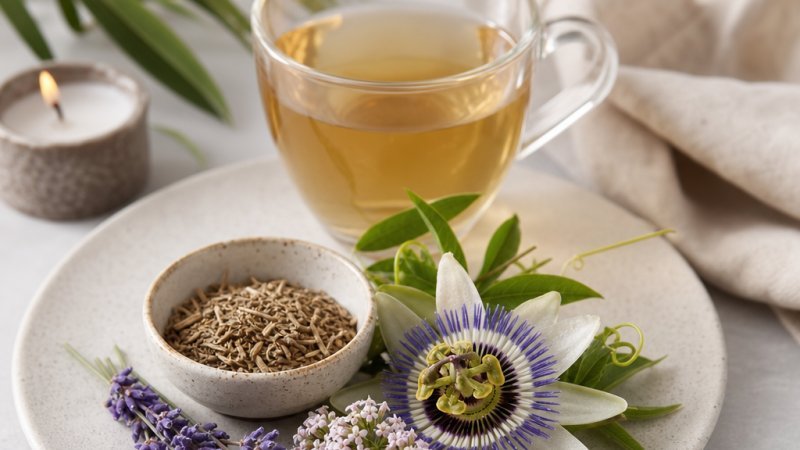
To enjoy the benefits of lavender, passionflower and valerian, several approaches are recommended. Lavender is commonly used in essential oils or infusions — one option is to add a few drops of essential oil to a diffuser before sleep. Passionflower can be consumed as a tea or capsules, especially in the evening. Valerian is usually available in liquid extracts or tablets, advisably taken about an hour before bedtime.
As dosage may vary by form and brand, it is important to follow product instructions or consult a health professional. There is currently no standardised dose, but combined use has traditionally been consumed without significant adverse effects.
Valerian and Benzodiazepines, Passionflower and Pregnancy: Precautions for the Sedating Trio
In general, lavender, passionflower and valerian are considered safe for most people. However, caution is advised for pregnant or breastfeeding women, and it is essential to consult a doctor before use in children. Their combination with sedative or antidepressant medications should also be avoided as they may potentiate their effects.
People with chronic medical conditions should speak with a health professional before beginning any herbal treatment. It is essential to be alert to possible allergic reactions and, in the event of adverse symptoms, discontinue use.
Lavender Pillows, Valerian Tincture and the European Tradition of Plant-Based Sleep
Lavender has a long history in the Mediterranean, used in relaxation rituals. In Tibb al-Nabawi medicine, it is valued for its calming qualities. Passionflower has been widely used by indigenous American communities as a natural tranquilliser. Valerian, known since ancient Greece, is mentioned in the writings of Hippocrates for its sedative properties (Dioscorides, 1st century).
These herbs play an important role in diverse cultures for their ability to improve emotional and physical wellbeing, which remains relevant today.
Frequently Asked Questions
How does lavender help with sleep? Lavender, with its relaxing aroma, can help promote restorative sleep by reducing anxiety and facilitating relaxation.
What benefits does passionflower have for rest? Passionflower can improve sleep quality by increasing GABA levels, a neurotransmitter that induces relaxation.
Is valerian effective for relaxation? Yes, valerian is effective in reducing the time needed to fall asleep and improves sleep quality through its effects on the nervous system.
What other herbs help with better sleep? In addition to lavender, passionflower and valerian, chamomile and lemon balm are known for their calming properties.
Is it safe to use all these herbs together? Generally, it is safe to combine these herbs. However, it is always prudent to consult with a health professional to avoid unwanted interactions.
Conclusion
Lavender, passionflower and valerian represent a powerful trio for improving sleep quality, especially during hot nights. Their use, historically supported and scientifically validated, offers a natural alternative for those seeking better rest. However, it is always advisable to consult a professional before incorporating them into your routine, ensuring safe and effective use.
References and Further Reading
Bent S, et al. (2006). Valerian for sleep: a systematic review and meta-analysis. Am J Med. 119(12):1005-12. DOI: 10.1016/j.amjmed.2006.02.026
Ngan A & Conduit R (2011). A double-blind, placebo-controlled investigation of the effects of Passiflora incarnata herbal tea on subjective sleep quality. Phytother Res. 25(8):1153-9. DOI: 10.1002/ptr.3400
EMA HMPC (2013). Community herbal monograph on Lavandula angustifolia Mill., flos. European Medicines Agency. EMA Monograph
Guadagna S, et al. (2020). Plant extracts for sleep disturbances: a systematic review. Evid Based Complement Alternat Med. 2020:3792390. DOI: 10.1155/2020/3792390
Srivastava JK, Shankar E, Gupta S (2010). Chamomile: A herbal medicine of the past with bright future. Mol Med Rep. 3(6):895-901. DOI: 10.3892/mmr.2010.377
Learn how to make a functional granita tea at home. Discover recipes, health benefits, preparation tips and cultural variants for this refreshing summer drink.
Can you drink tea while fasting? Discover which infusions support intermittent fasting, their scientific evidence, safety precautions and myths vs reality.
Discover lechuguilla, the strawberry tree and St John’s wort — Spanish native plants with surprising medicinal properties, scientific evidence, safety precautions and integration tips.
Compare traditional horchata and cold infusions in the battle of Spanish natural drinks. Nutritional profiles, science, preparation tips and cultural roots explored.
Make tea the star of your Saturday wellbeing ritual. Antioxidants, L-theanine, preparation tips, cultural traditions and science-backed benefits for a mindful weekend.
Discover how lavender, passionflower and valerian improve sleep quality on hot nights. Scientific evidence, preparation tips, safety precautions and cultural traditions.
Build your perfect travel infusion kit for summer. Digestive, relaxing and refreshing teas — scientific evidence, preparation tips, cultural traditions and practical advice.
Explore adaptogen teas — ginseng, ashwagandha, rhodiola — their active compounds, scientific evidence, preparation tips and cultural origins. A guide to choosing well.
We use our own cookies to keep the shop working (language, basket and checkout), to measure anonymously how the site is used, and to know which channel brought you here. We do not use advertising or profiling, and we do not share this data with third parties.
Functional
Always active
This technical storage is strictly necessary for the site to work: keeping your language, your basket and your checkout session. Without it you cannot complete an order.
Preferences
The technical storage or access is necessary for the legitimate purpose of storing preferences that are not requested by the subscriber or user.
Statistics
Our own anonymous measurement of page views and visits, so we can understand which content is useful. It is not shared with anyone and is not used to build profiles.The technical storage or access that is used exclusively for anonymous statistical purposes. Without a subpoena, voluntary compliance on the part of your Internet Service Provider, or additional records from a third party, information stored or retrieved for this purpose alone cannot usually be used to identify you.
Order attribution
Records which channel brought you to the shop (a search engine, a link or a campaign) so an order can be attributed to its source. It is not used for advertising or commercial profiling.