Matcha in Summer: How to Drink It Cold Without Losing Any of Its Properties
Almate
June 17th, 2026
No Comments
6 mins read
Share this article
A Journey through the History of Matcha: From Zen Monks to Your Refreshing Summer Drinks
Matcha is a type of green tea that has been part of Japanese culture for centuries. Its history begins in China, but it was in Japan that it reached its maximum expression, especially with the Zen monks who used it for meditation. In the 12th and 13th centuries, the Japanese monk Eisai introduced the tea cultivation method that we know today as matcha. This tea is ground into a fine powder, different from ordinary green tea which is only infused; so when you drink matcha, you ingest the entire tea leaf.
Traditionally, it has been consumed hot in tea ceremonies, but its worldwide popularity has grown, allowing adaptations such as cold matcha. According to classical texts and traditional medicine such as Tibb al-Nabawi, matcha is revered for its energising and antioxidant properties. This millennial combination of tradition and modern benefits makes matcha an attractive option for refreshing yourself in summer without losing its beneficial qualities.
EGCG and L-Theanine: The Two Compounds that Make Matcha Unique
Matcha is famous for its high levels of antioxidants, particularly catechins, which help combat cellular damage in the body. The most potent of these is EGCG (epigallocatechin gallate), known for its antioxidant and anti-inflammatory properties. Additionally, matcha contains L-theanine, an amino acid that can promote calm and improve concentration.
These compounds work together to provide a stable source of energy without the typical “crash” of caffeine alone. L-theanine modulates the effects of caffeine, allowing for a more uniform and prolonged state of alertness. This balance, combined with vitamins and minerals present in matcha, makes it a healthy option, suited both for moments of serenity and for more dynamic activities.
What Studies Show: Heart, Metabolism and Cognition
Numerous studies have explored the benefits of matcha. According to a study by Kuriyama and colleagues (2006) in the “Journal of American Medical Association”, regular consumption of green tea is associated with a reduced risk of cardiovascular disease (PMID: 16188995). Another study published by Nagao et al. (2005) shows that catechin consumption positively impacts the reduction of body fat (PMID: 15711042).
In the context of its cold use, an analysis by Zhou et al. (2020) in “Food Chemistry” confirmed that the antioxidant properties of matcha are maintained even when served cold. These findings support the use of matcha not only as a comprehensive wellbeing supplement but also as a refreshing drink in summer.
Practical Guide: How to Prepare Cold Matcha for Summer
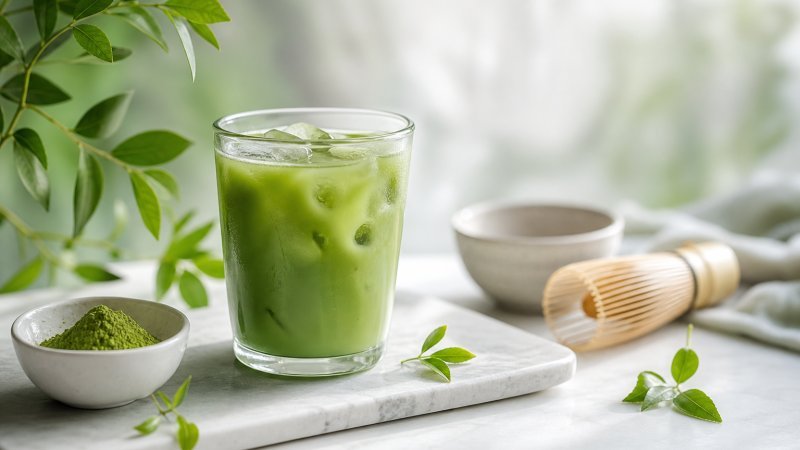
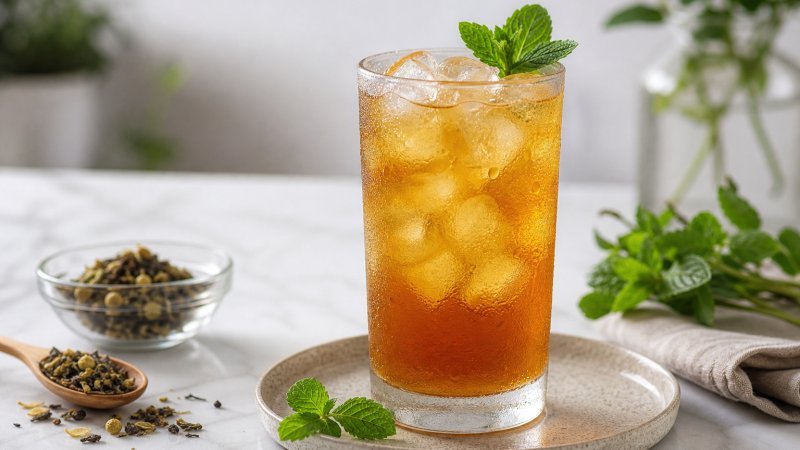
To enjoy cold matcha without losing its benefits, you can follow a simple recipe. Start by using 1-2 teaspoons of high-quality matcha powder. Sift the powder to avoid lumps and dissolve it in a little hot water. Then add ice and cold water, mixing well until you obtain a homogeneous drink. If you prefer a sweet touch, a little honey or agave syrup can be added.
By adapting it this way, matcha can form part of your daily routine, providing vitality and freshness without empty calories. According to WHO guidelines, it is safe to consume up to 3 cups a day, which makes a maximum of approximately 300 mg of catechins (WHO Monographs).
Safety and Precautions: When Should You Be Careful with Matcha?
Despite its benefits, matcha should be consumed with caution by those sensitive to caffeine. Pregnant or breastfeeding women, as well as people with liver problems, should consult their doctors before incorporating matcha into their daily diet.
Excess matcha can lead to problems such as insomnia or gastritis due to caffeine. It is crucial to maintain recommended consumption levels and be alert to any unusual symptoms. According to the EMA, it is a safe practice with these precautions (EMA Guidance).
Chanoyu and Green Tea Culture: A Ceremony in Every Cup
In traditional Chinese and Japanese medicine, matcha is considered for its ability to improve mental clarity and physical endurance. In Li Shizhen’s “Compendium of Materia Medica”, its revitalising effects and heart-protective properties are highlighted. In Japan, matcha is not only a cultural symbol but also an essential component in prolonged wellbeing practices.
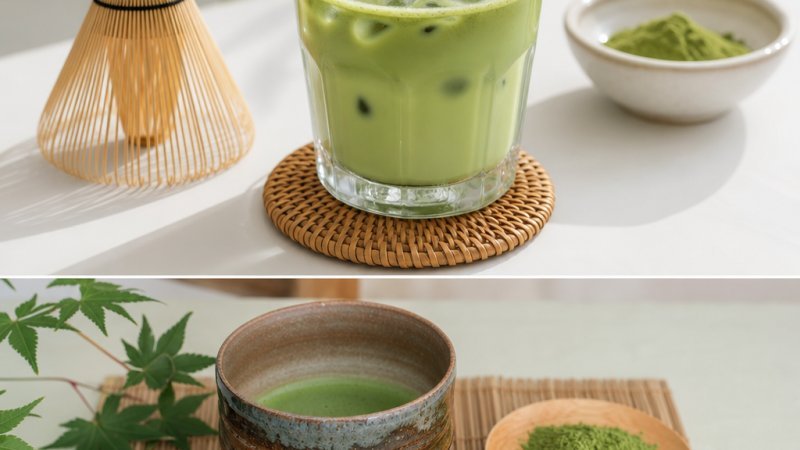
Its ritualised use in tea ceremonies symbolises tranquility and mindfulness, central values in many Asian cultures. This cultural background adds even more value to the experience of consuming matcha in our daily lives.
Frequently Asked Questions about Cold Matcha
Does matcha lose its properties when taken cold? No, the antioxidant properties of matcha are maintained when prepared cold.
How many cups of matcha can I drink per day? Generally, 1 to 3 cups daily are safe for most people.
Is there any difference between hot and cold matcha? Only in temperature and flavour; the benefits remain the same.
Does matcha help with weight loss? Matcha can support weight loss as part of a balanced regimen, although it is not a magic solution.
Can matcha cause insomnia? The caffeine in matcha can contribute to insomnia if consumed in excess or too late in the day.
Conclusion
Matcha, with its rich history and impressive properties, is a wonderful addition to your summer routine. You can enjoy it cold without any fear of losing its health benefits. Always remember to consult a health professional before making significant changes to your diet. May matcha bring you not only flavour, but also balance and serenity in every season.
References and Further Reading
Hidese S, et al. (2019). Effects of L-Theanine administration on stress-related symptoms and cognitive functions in healthy adults: a randomized controlled trial. Nutrients. 11(10):2362. DOI: 10.3390/nu11102362
Kochman J, et al. (2021). Health benefits and chemical composition of matcha green tea: a review. Molecules. 26(1):85. DOI: 10.3390/molecules26010085
Uchida K, et al. (2024). Effect of matcha green tea on cognitive functions and sleep quality in older adults with cognitive decline: a randomized controlled study over 12 months. PLoS One.DOI: 10.1371/journal.pone.0309287
Kuriyama S, et al. (2006). Green tea consumption and mortality due to cardiovascular disease, cancer, and all causes in Japan. JAMA. 296(10):1255-65. DOI: 10.1001/jama.296.10.1255
Weiss DJ, Anderton CR (2003). Determination of catechins in matcha green tea by micellar electrokinetic chromatography. J Chromatogr A. 1011(1-2):173-80. DOI: 10.1016/S0021-9673(03)01133-6
Learn how to make a functional granita tea at home. Discover recipes, health benefits, preparation tips and cultural variants for this refreshing summer drink.
Can you drink tea while fasting? Discover which infusions support intermittent fasting, their scientific evidence, safety precautions and myths vs reality.
Discover lechuguilla, the strawberry tree and St John’s wort — Spanish native plants with surprising medicinal properties, scientific evidence, safety precautions and integration tips.
Compare traditional horchata and cold infusions in the battle of Spanish natural drinks. Nutritional profiles, science, preparation tips and cultural roots explored.
Make tea the star of your Saturday wellbeing ritual. Antioxidants, L-theanine, preparation tips, cultural traditions and science-backed benefits for a mindful weekend.
Discover how lavender, passionflower and valerian improve sleep quality on hot nights. Scientific evidence, preparation tips, safety precautions and cultural traditions.
Build your perfect travel infusion kit for summer. Digestive, relaxing and refreshing teas — scientific evidence, preparation tips, cultural traditions and practical advice.
Explore adaptogen teas — ginseng, ashwagandha, rhodiola — their active compounds, scientific evidence, preparation tips and cultural origins. A guide to choosing well.
We use our own cookies to keep the shop working (language, basket and checkout), to measure anonymously how the site is used, and to know which channel brought you here. We do not use advertising or profiling, and we do not share this data with third parties.
Functional
Always active
This technical storage is strictly necessary for the site to work: keeping your language, your basket and your checkout session. Without it you cannot complete an order.
Preferences
The technical storage or access is necessary for the legitimate purpose of storing preferences that are not requested by the subscriber or user.
Statistics
Our own anonymous measurement of page views and visits, so we can understand which content is useful. It is not shared with anyone and is not used to build profiles.The technical storage or access that is used exclusively for anonymous statistical purposes. Without a subpoena, voluntary compliance on the part of your Internet Service Provider, or additional records from a third party, information stored or retrieved for this purpose alone cannot usually be used to identify you.
Order attribution
Records which channel brought you to the shop (a search engine, a link or a campaign) so an order can be attributed to its source. It is not used for advertising or commercial profiling.