Tea for Summer Stress: Plants that Calm When the Pace Picks Up
Almate
June 17th, 2026
No Comments
5 mins read
Share this article
From Monastery to Modern Wellbeing: Plants that Have Calmed Stress for Centuries
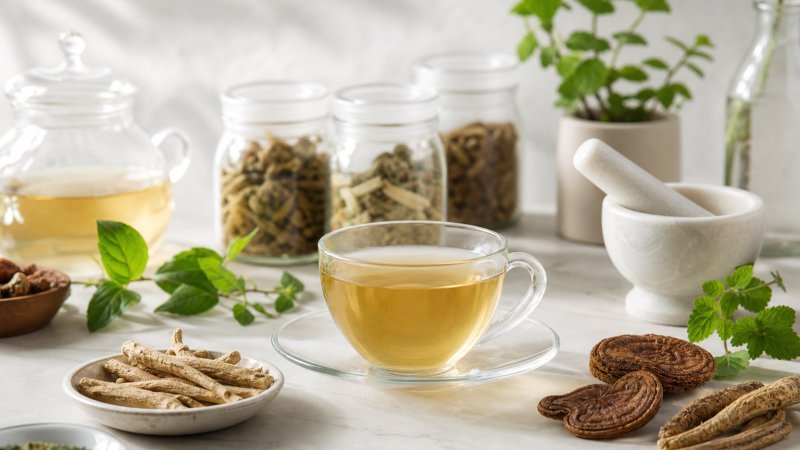
Since ancient times, plant infusions have been used to calm the mind and body. Civilisations such as the Chinese, Indian and Mediterranean have used teas to relieve stress and improve wellbeing. In China, the ancient text “Shennong Bencao Jing” mentions herbs such as ginseng and ginger for their relaxing properties. In Ayurveda, age-old practices use ashwagandha to balance the nervous system.
In Europe, chamomile and linden infusions have been common since the Middle Ages to promote calm. According to Nicholas Culpeper, chamomile was known for its ability to relieve tension. In the classical Islamic world, Ibn Sina in his “Canon of Medicine” recommended herbs such as valerian to calm nervousness. These traditions have converged with recent scientific research supporting their benefits, creating an integrative approach to managing stress.
L-Theanine, Apigenin and Linalool: The Compounds that Put the Brakes on Summer Stress
Some plants used in teas for stress contain active compounds that help relax the nervous system. Chamomile, for example, contains apigenin, a flavonoid that binds to benzodiazepine receptors in the brain, promoting a sense of calm. Ginseng contains ginsenosides, which help reduce inflammation and improve the body’s response to stress.
Ashwagandha is famous for its withanolides, which regulate the production of cortisol, the stress hormone. Valerian contains valeric acid, which increases levels of gamma-aminobutyric acid (GABA), a neurotransmitter that reduces excessive nerve activity. Each of these compounds helps in specific ways to mitigate the negative effects of stress and foster a sense of wellbeing.
What Clinical Trials Say: Can Tea Reduce Cortisol?
Numerous studies support the use of certain plants to reduce stress. A clinical trial showed that chamomile can improve symptoms of generalised anxiety (Amsterdam et al., 2009). Another study indicated that ashwagandha efficiently reduces stress and anxiety in adults (Chandrasekhar et al., 2012). Valerian has been positively reviewed by the German Commission E for its safe calming effects (Blumenthal, M., 2000).
Ginseng, studied in a systematic review, showed potential to reduce stress and fatigue (Reay et al., 2005). These data integrate with traditional knowledge, confirming that these plants not only have a cultural legacy, but are also supported by modern research. This strengthens their use as natural allies in stress management.
Which Infusion to Choose Based on Your Type of Stress and Time of Day
To enjoy the benefits of these infusions, prepare two cups a day of the following: chamomile, ginseng, ashwagandha or valerian. A teaspoon of the dried plant is sufficient for one cup. Boil water and pour it over the plant, leave to steep for five to ten minutes and strain before drinking.
Choose products labelled as therapeutic and organic quality whenever possible. For beginners, starting with chamomile is a safe option. If you take other medications or have pre-existing health conditions, consult a professional before adding new herbs to your routine. Following these guidelines, you can experience gradual relief from daily stress.
Valerian, Linden and Passionflower: What You Need to Know Before Taking Them
Although herbal infusions are generally safe, it is important to take certain precautions. Valerian can cause drowsiness, so avoid it before driving or using machinery. Pregnant or breastfeeding women should avoid ginseng, as it could affect hormone levels.
Always consult a doctor if you are taking medications, especially sedatives or anxiolytics, to avoid interactions. People with thyroid conditions should be particularly careful with ashwagandha. Taking herbal teas in moderation and under specialist guidance helps minimise possible risks.
Tea as an Anti-Stress: From Monasteries to Phytotherapy Consultations
In traditional Chinese medicine, ginseng is considered an adaptogen, which balances the body and improves resistance to stress. In Ayurveda, ashwagandha is known as a “rasayana”, a physical and mental rejuvenator. Chamomile, widespread in European folk medicine, is commonly used to improve sleep and reduce anxiety.
Tibb al-Nabawi, the Islamic prophetic medicine system, also mentions chamomile as a calming herb. These uses demonstrate that herbs have been an integral part of many cultures, allowing a natural approach to emotional wellbeing care.
Frequently Asked Questions about Stress Teas
What is the best time to take valerian tea? Take it before sleeping to promote good rest, as it can cause drowsiness.
Can I mix different types of herbs in an infusion? Yes, but consult a herbalist or doctor to avoid unwanted interactions between herbs.
How long should these teas be consumed to notice effects? Effects can vary, but it is generally recommended to consume them for at least two weeks to observe benefits.
Are these teas safe for children? Consult a paediatrician before offering herbal infusions to children, as their effects may differ in minors.
Do stress teas cause addiction? No, these infusions are not addictive, as they do not contain psychoactive substances.
Conclusion
Stress teas offer a natural and traditional option to calm the mind in turbulent times. With their roots in diverse cultures and support from modern research, these infusions are a valuable wellbeing tool. Remember to consult a health professional before making significant changes to your herbal routine. Moderation and proper guidance are key to enjoying their benefits without risks.
References and Further Reading
Hidese S, et al. (2019). Effects of L-Theanine administration on stress-related symptoms and cognitive functions in healthy adults: a randomized controlled trial. Nutrients. 11(10):2362. DOI: 10.3390/nu11102362
Shakeri A, Sahebkar A, Javadi B (2016). Melissa officinalis L. – A review of its traditional uses, phytochemistry and pharmacology. J Ethnopharmacol. 188:204-228. DOI: 10.1016/j.jep.2016.05.010
Bent S, et al. (2006). Valerian for sleep: a systematic review and meta-analysis. Am J Med. 119(12):1005-12. DOI: 10.1016/j.amjmed.2006.02.026
Akhondzadeh S, et al. (2001). Passionflower in the treatment of generalized anxiety: a pilot double-blind randomized controlled trial. J Clin Pharm Ther. 26(5):363-7. DOI: 10.1046/j.1365-2710.2001.00367.x
EMA HMPC (2012). Community herbal monograph on Tilia cordata Mill., Tilia platyphyllos Scop., flos. European Medicines Agency. EMA Monograph (Tila)
Learn how to make a functional granita tea at home. Discover recipes, health benefits, preparation tips and cultural variants for this refreshing summer drink.
Can you drink tea while fasting? Discover which infusions support intermittent fasting, their scientific evidence, safety precautions and myths vs reality.
Discover lechuguilla, the strawberry tree and St John’s wort — Spanish native plants with surprising medicinal properties, scientific evidence, safety precautions and integration tips.
Compare traditional horchata and cold infusions in the battle of Spanish natural drinks. Nutritional profiles, science, preparation tips and cultural roots explored.
Make tea the star of your Saturday wellbeing ritual. Antioxidants, L-theanine, preparation tips, cultural traditions and science-backed benefits for a mindful weekend.
Discover how lavender, passionflower and valerian improve sleep quality on hot nights. Scientific evidence, preparation tips, safety precautions and cultural traditions.
Build your perfect travel infusion kit for summer. Digestive, relaxing and refreshing teas — scientific evidence, preparation tips, cultural traditions and practical advice.
Explore adaptogen teas — ginseng, ashwagandha, rhodiola — their active compounds, scientific evidence, preparation tips and cultural origins. A guide to choosing well.
We use our own cookies to keep the shop working (language, basket and checkout), to measure anonymously how the site is used, and to know which channel brought you here. We do not use advertising or profiling, and we do not share this data with third parties.
Functional
Always active
This technical storage is strictly necessary for the site to work: keeping your language, your basket and your checkout session. Without it you cannot complete an order.
Preferences
The technical storage or access is necessary for the legitimate purpose of storing preferences that are not requested by the subscriber or user.
Statistics
Our own anonymous measurement of page views and visits, so we can understand which content is useful. It is not shared with anyone and is not used to build profiles.The technical storage or access that is used exclusively for anonymous statistical purposes. Without a subpoena, voluntary compliance on the part of your Internet Service Provider, or additional records from a third party, information stored or retrieved for this purpose alone cannot usually be used to identify you.
Order attribution
Records which channel brought you to the shop (a search engine, a link or a campaign) so an order can be attributed to its source. It is not used for advertising or commercial profiling.