Herb Cold Brew: The Most Refreshing Recipe for This Summer
Almate
June 17th, 2026
No comments
5 mins read
Share this article
A Journey Through Time: Origins of Herb Cold Brew
Herb cold brew combines ancient traditions with modern trends. Historically, herbal infusions were an essential part of traditional medicine in cultures around the world. In China, more than 2,000 years ago, herbal teas were used to cool and calm the body according to the Shennong Bencao Jing (Compendium of Materia Medica) (Li Shizhen). In the Mediterranean, herbs such as mint and thyme were used in infusions to take advantage of their refreshing properties, based on texts by Dioscorides.
Today, cold brew, or cold extraction, transforms these traditions into a modern drink. The preparation requires no heat, preserving the volatile and delicate compounds of the herbs. This technique is popular in warm places, offering refreshing relief without losing the benefits of the herbs. It is a refreshing evolution that honours the past while adapting to the present.
Mint, Chamomile and Hibiscus: The Actives that Work Cold
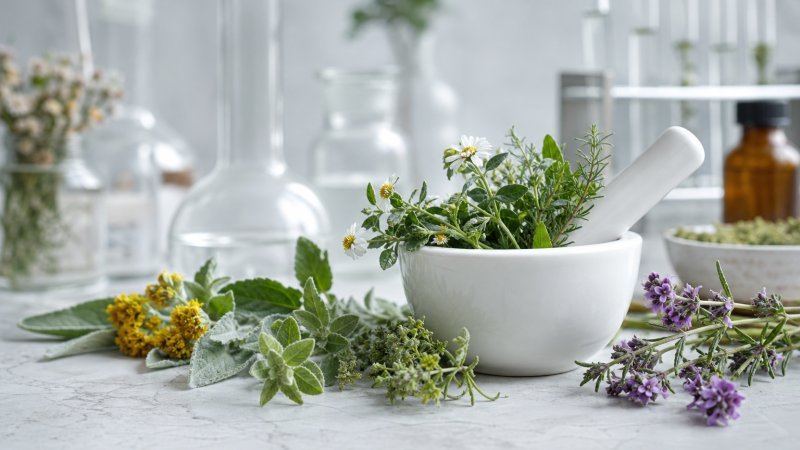
The herbs used in cold brew have active components with known effects. Mint, for example, contains menthol, which has refreshing and digestive properties (ESCOP Monographs). Chamomile includes apigenin, a compound that could calm the nervous system (Blumenthal, 2000). Hibiscus provides antioxidants such as anthocyanin, which can help cardiovascular health (Duke, 2002).
When making cold brew, the cold immersion process extracts these compounds gently, avoiding destruction by heat. This results in a more aromatic and less astringent drink, maximally preserving the natural properties of the herbs. Thus, cold brew becomes an option that is not only refreshing, but also functional and beneficial for health.
What Science Says: Studies on the Herbs in Your Cold Brew
Numerous studies support the benefits of herbal infusions. A study published by McKay and Blumberg (2006) in the Journal of Herbal Pharmacotherapy showed that chamomile infusion can reduce anxiety. Another study in the Journal of Nutrition showed that hibiscus can contribute to reducing blood pressure (McKay et al., 2010). These findings are consistent with uses in Ayurvedic and traditional Chinese medicine, where herbs have been valued for their relaxing and medicinal properties.
Official sources such as the European Medicines Agency (EMA) support the use of certain herbs in the treatment of digestive and nervous disorders. This shows that herbal infusions, even in cold brew format, are not only well-established traditions, but also practices supported by modern science.
How to Prepare and Enjoy Your Own Herb Cold Brew
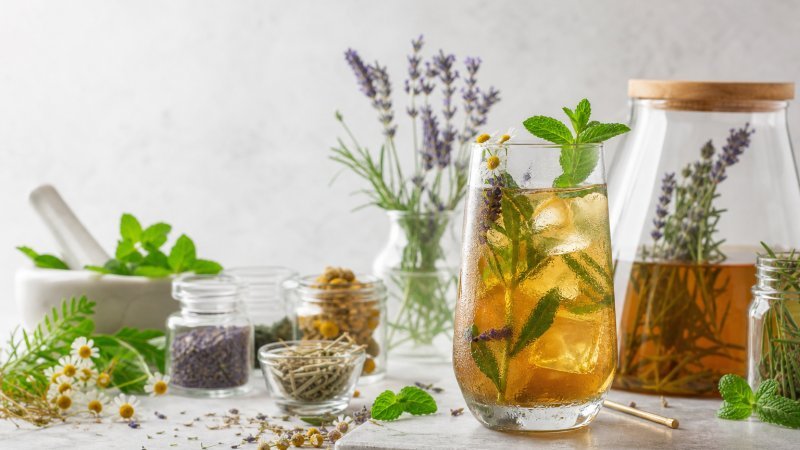
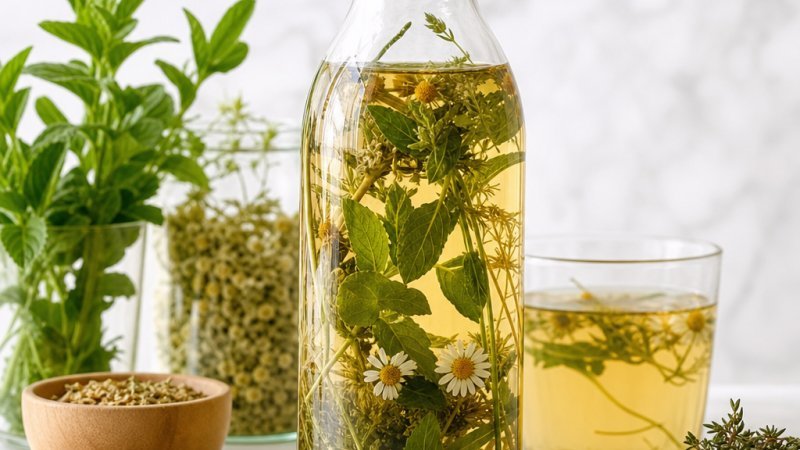
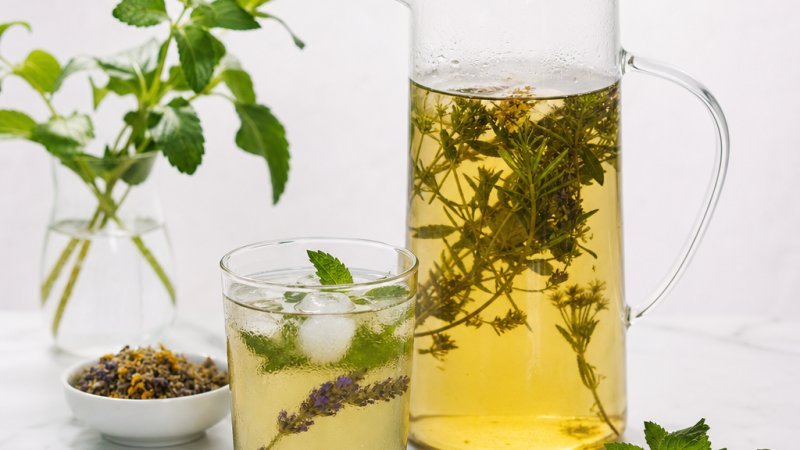
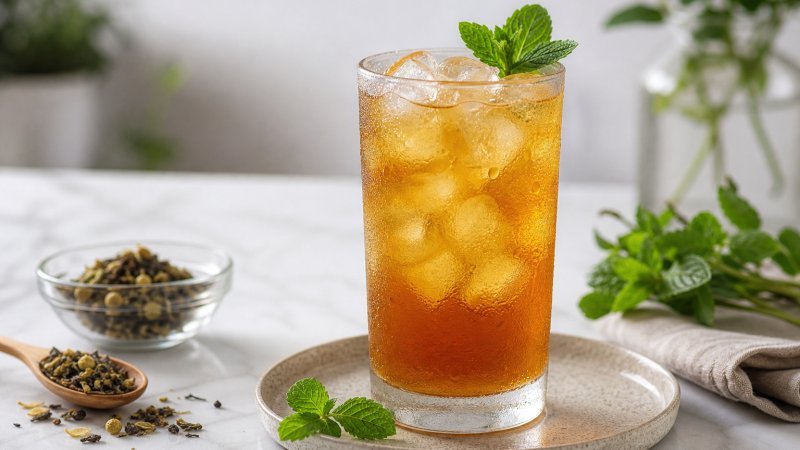
Preparing an herb cold brew is simple. You will need your favourite herbs: mint, chamomile or hibiscus are good options. Place approximately 15 grams of herbs in one litre of cold water. Leave to steep in the fridge for 12–24 hours. Strain the herbs and enjoy your drink.
Adjust the amount of herbs to your taste. To sweeten, add a little honey or lime when serving. Enjoy this ideal drink on a warm summer day. If you follow any dietary restrictions, consult the recommended doses in monographs such as those from ESCOP to ensure you do not exceed them.
Who Is Herb Cold Brew For? Real Precautions
Although herbal infusions are generally safe, some precautions are necessary. People with allergies to these plants should avoid consuming them. In addition, certain herbs can interact with medications, so it is key to consult a professional if you are taking medication.
Pregnant or breastfeeding women should also be cautious. Overusing certain infusions can cause unwanted effects. It is always advisable to start with small amounts and observe how your body reacts.
Traditional and Cultural Uses of Herbs in Cold Infusion
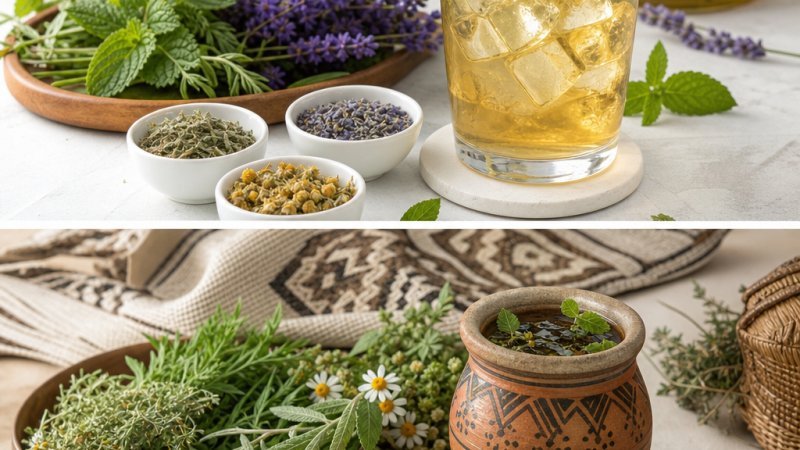
Herbal infusions have a prominent place in various cultures. In Tibb al-Nabawi, the use of certain herbs to refresh the body and spirit is recommended. In Morocco, mint is widely used in cold teas due to its ability to ease body heat (Journal of Ethnopharmacology).
The Hawaiian tradition uses cold hibiscus infusions as a way to honour the land and natural resources, uniting community and nature. Each culture contributes its unique knowledge, enriching the contemporary practice of cold brew.
Frequently Asked Questions about Herb Cold Brew
Can I use any type of herb for cold brew? Yes, but it is best to choose herbs known to be safe and pleasant to the palate, such as mint or chamomile.
How long should I let the cold brew steep? Leave it to steep for 12–24 hours depending on the desired intensity.
Should I use hot water at all? No, the cold brew process is done with cold water to preserve the volatile compounds.
Can I sweeten my cold brew? Yes, you can add honey, sugar or natural sweeteners as you prefer.
Does herb cold brew help improve health? It can contribute to relaxation and digestive processes, depending on the herbs used.
Conclusion
Herb cold brew is a delicious way to enjoy the traditional properties of these plants. It is refreshing, simple to prepare and can offer health benefits. Consider experimenting with different herbs and sweeteners to find your perfect blend.
Always remember to consult a health professional before incorporating new infusions into your routine, especially if you are under medical treatment or have specific conditions.
References and Further Reading
McKay DL, Blumberg JB (2006). A review of the bioactivity and potential health benefits of chamomile tea (Matricaria recutita L.). Phytother Res. 20(7):519-30. PMID: 16628544
McKay DL, Chen CO, Saltzman E, Blumberg JB (2010). Hibiscus sabdariffa L. tea (tisane) lowers blood pressure in prehypertensive and mildly hypertensive adults. J Nutr. 140(2):298-303. DOI: 10.3945/jn.109.115097
Srivastava JK, Shankar E, Gupta S (2010). Chamomile: A herbal medicine of the past with bright future. Mol Med Rep. 3(6):895-901. DOI: 10.3892/mmr.2010.377
Menthol can be safely applied to improve thermal perception during physical exercise: a meta-analysis of randomized controlled trials (2020). Sci Rep. 10:13783. DOI: 10.1038/s41598-020-70499-9
EMA HMPC (2010). Community herbal monograph on Mentha × piperita L., aetheroleum. European Medicines Agency. EMA Monograph
Learn how to make a functional granita tea at home. Discover recipes, health benefits, preparation tips and cultural variants for this refreshing summer drink.
Can you drink tea while fasting? Discover which infusions support intermittent fasting, their scientific evidence, safety precautions and myths vs reality.
Discover lechuguilla, the strawberry tree and St John’s wort — Spanish native plants with surprising medicinal properties, scientific evidence, safety precautions and integration tips.
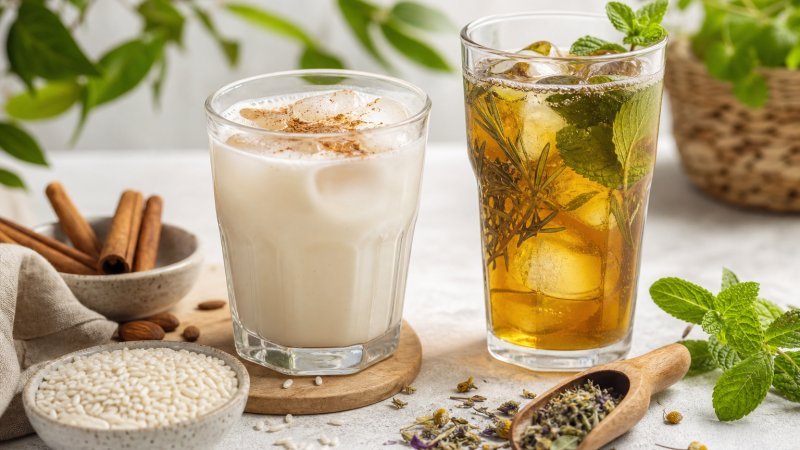
Compare traditional horchata and cold infusions in the battle of Spanish natural drinks. Nutritional profiles, science, preparation tips and cultural roots explored.
Make tea the star of your Saturday wellbeing ritual. Antioxidants, L-theanine, preparation tips, cultural traditions and science-backed benefits for a mindful weekend.
Discover how lavender, passionflower and valerian improve sleep quality on hot nights. Scientific evidence, preparation tips, safety precautions and cultural traditions.
Build your perfect travel infusion kit for summer. Digestive, relaxing and refreshing teas — scientific evidence, preparation tips, cultural traditions and practical advice.
Explore adaptogen teas — ginseng, ashwagandha, rhodiola — their active compounds, scientific evidence, preparation tips and cultural origins. A guide to choosing well.
We use our own cookies to keep the shop working (language, basket and checkout), to measure anonymously how the site is used, and to know which channel brought you here. We do not use advertising or profiling, and we do not share this data with third parties.
Functional
Always active
This technical storage is strictly necessary for the site to work: keeping your language, your basket and your checkout session. Without it you cannot complete an order.
Preferences
The technical storage or access is necessary for the legitimate purpose of storing preferences that are not requested by the subscriber or user.
Statistics
Our own anonymous measurement of page views and visits, so we can understand which content is useful. It is not shared with anyone and is not used to build profiles.The technical storage or access that is used exclusively for anonymous statistical purposes. Without a subpoena, voluntary compliance on the part of your Internet Service Provider, or additional records from a third party, information stored or retrieved for this purpose alone cannot usually be used to identify you.
Order attribution
Records which channel brought you to the shop (a search engine, a link or a campaign) so an order can be attributed to its source. It is not used for advertising or commercial profiling.